Local Heroes Awards 2026
*The awards are now officially closed for 2026. Please stay tuned for details and updates on next year's program.*


The Vision Super Local Heroes Awards are designed to bring much-needed recognition to the work of local government employees who go above and beyond for their community.
Nominations are open to all local government workers in Victoria and NSW, including employees of associated organisations operated by the council, and local libraries. Nominations may be made on behalf of others or self-nominated.
The awards are held in partnership with the Australian Services Union (ASU).
Meet our 2026 winners
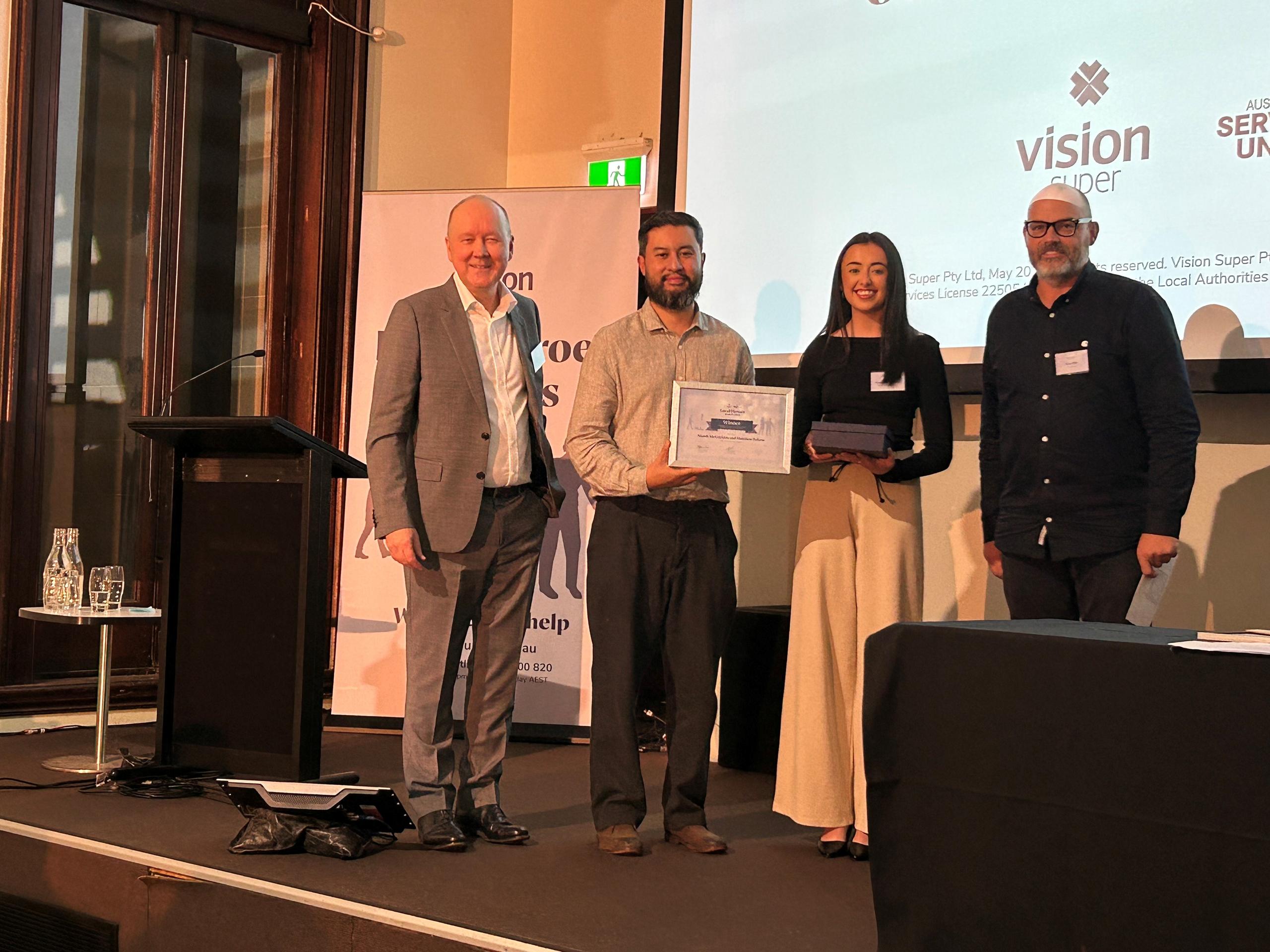
Niamh McGuckian and Matthew Balane, City of Canada Bay
Niamh and Matt transformed a routine complaint from a neighbour about overgrown vegetation, hoarding, and vermin into a compassionate, multi-agency response that provided life-changing support for a vulnerable elderly resident. After discovering the tenant was grieving the loss of his wife and struggling with severe arthritis and financial hardship, they worked sensitively and persistently over more than nine months to coordinate support from My Aged Care, Fire NSW, Wesley Mission and the property manager.
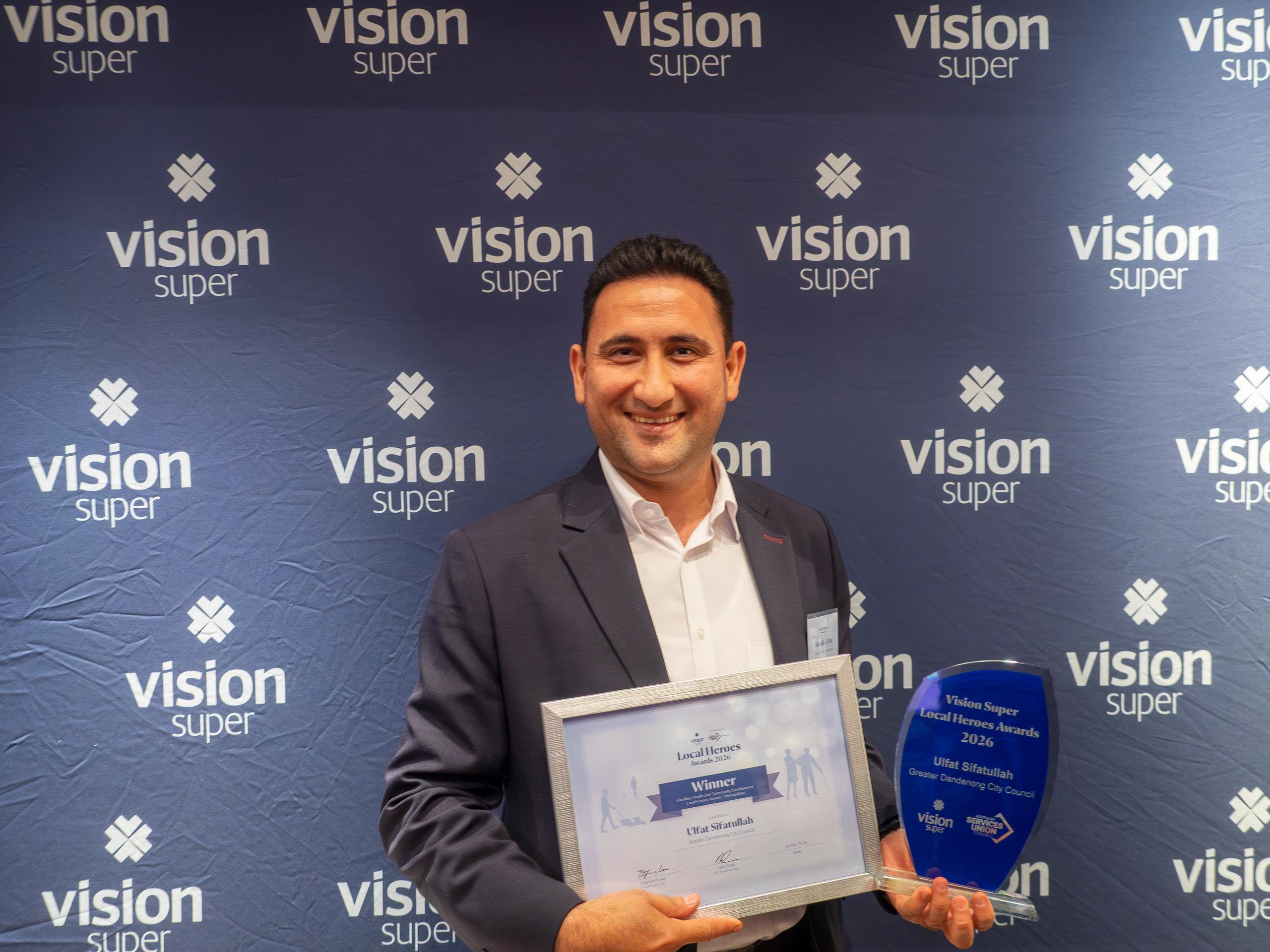
Ulfat Sifatullah, City of Greater Dandenong
Since joining the Dandenong Zero Project, Ulfat has demonstrated strong leadership and commitment to supporting people experiencing homelessness. He has contributed to helping 42 individuals secure long-term housing and played a key role in establishing the municipality’s first By Name List (BNL), which supports coordinated outreach to around 70 vulnerable community members. Ulfat’s work has strengthened collaboration across homelessness services, improved referral pathways, and increased access to essential supports such as housing, health, and financial assistance.
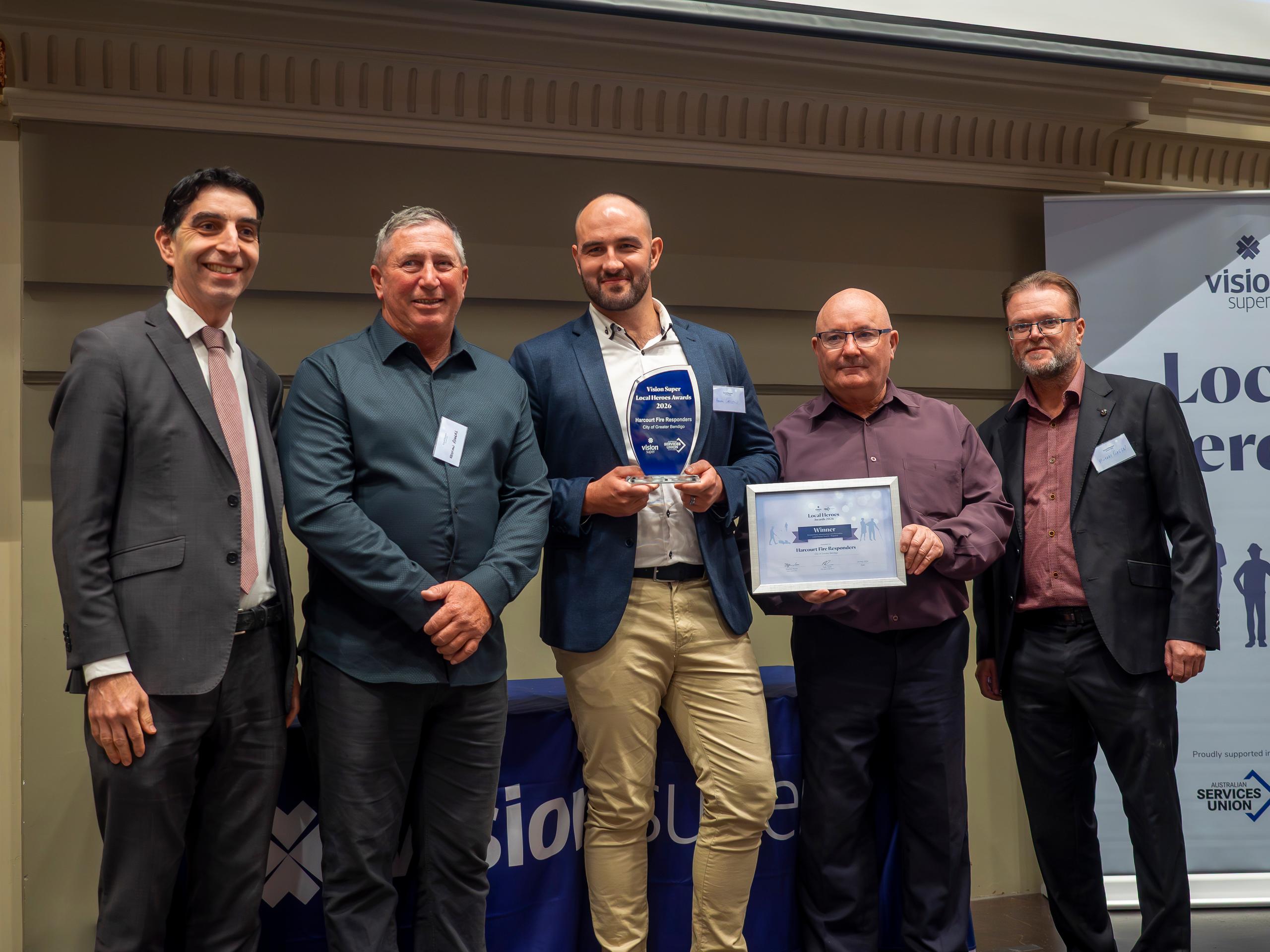
Harcourt Fire Responders, City of Greater Bendigo
This group of employees played a critical frontline role during the devastating Harcourt bushfires, displaying courage and selflessness during a major regional disaster. During the emergency, these staff members were deployed directly to the fireground, where their actions had an immediate and significant impact on community safety. Their work included grading and maintaining fire containment lines to protect homes and infrastructure, coordinating and delivering fuel supply to keep machinery and emergency equipment operational, and providing water cartage that directly supported firefighting efforts.
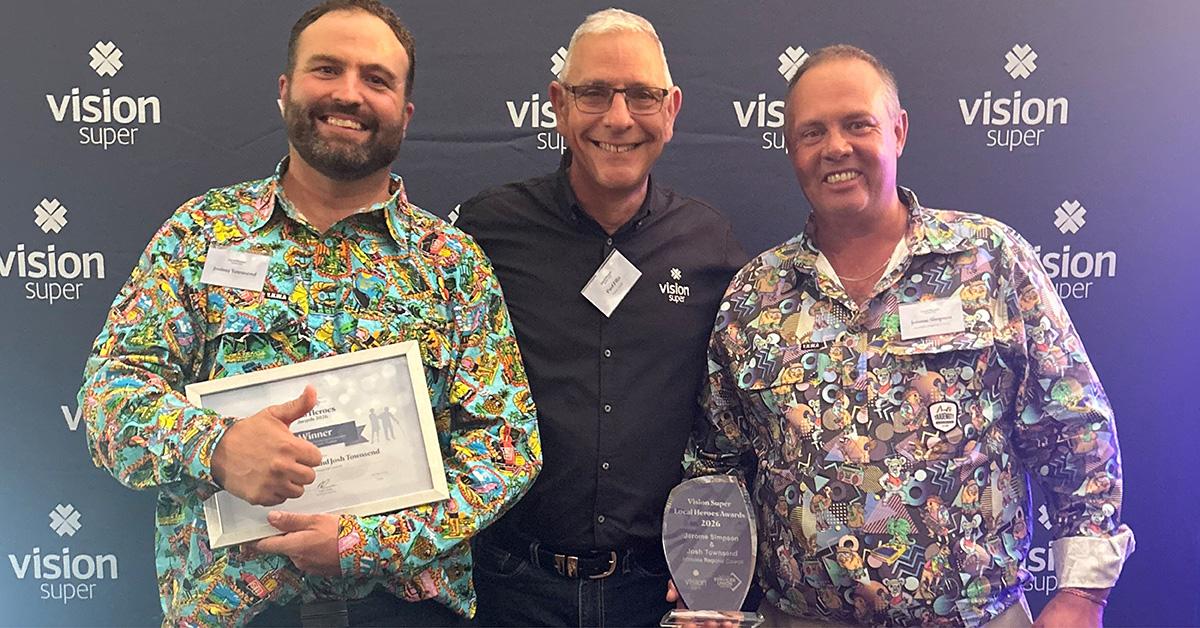
Jerome Simpson and Josh Townsend, Armidale Regional Council
Jerome and Josh led the introduction of the TradeMutt initiative by wearing brightly coloured hats designed to spark conversations about mental health. Their efforts quickly gained support from management and staff, leading to the rollout of over 400 TradeMutt shirts and hats across council workplaces and increased awareness of the TIACS counselling service for blue-collar workers. Together, Jerome and Josh have helped create a more open, supportive, and connected workplace culture, encouraging staff to speak openly about wellbeing and seek help when needed.
Meet our 2026 runners-up
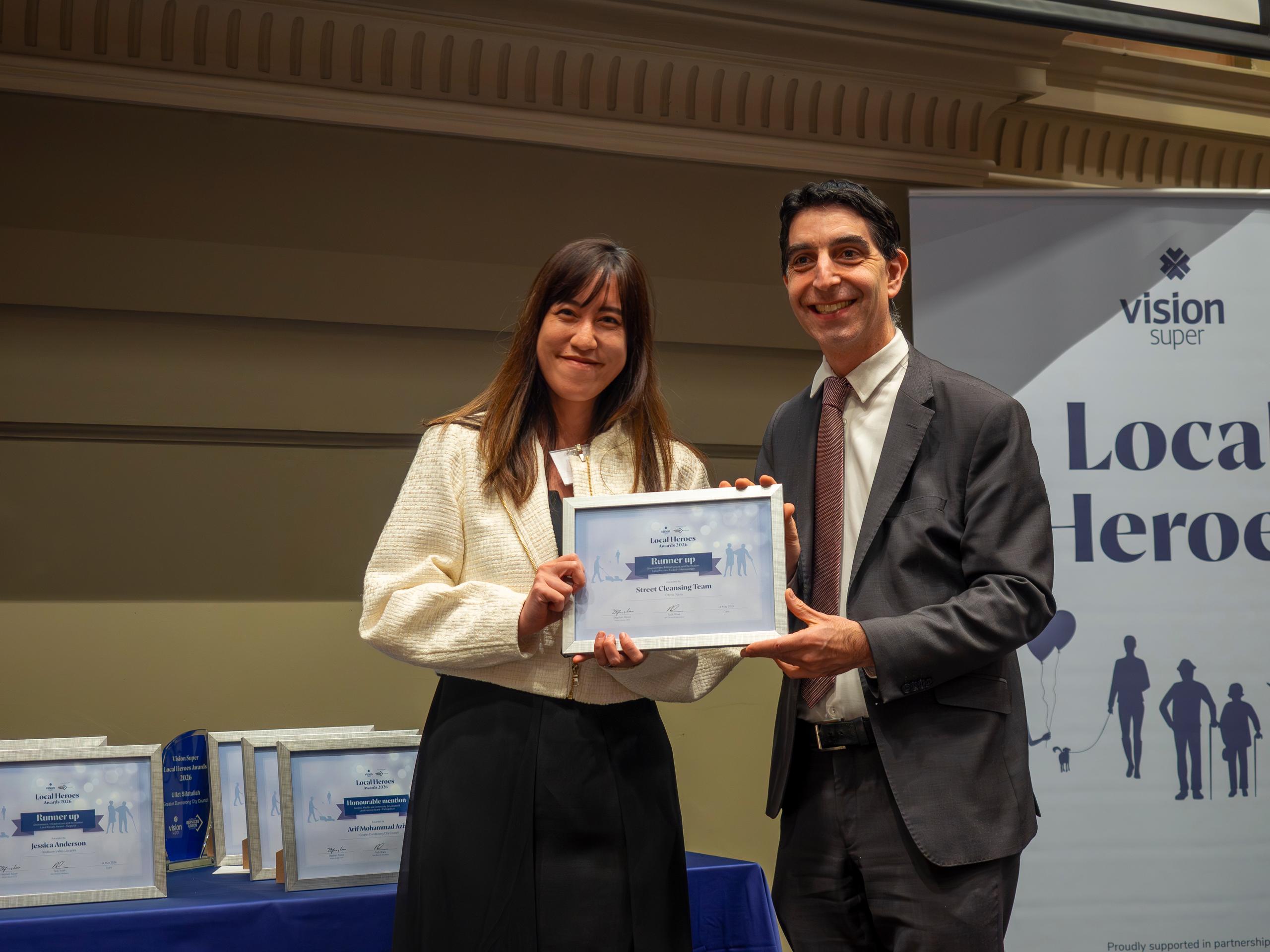
Street Cleansing Team, Yarra City Council
The Street Cleansing Team play a vital role in keeping Yarra clean by removing dumped rubbish, weeds, hard waste, and around 12,000 syringes each month. Working in difficult and often unpleasant conditions, they consistently show dedication, professionalism, and care for the community. A recent example of their outstanding work involved clearing 12 truckloads of waste and 1,300 syringes from a laneway occupied by rough sleepers, restoring the area for local traders and residents.
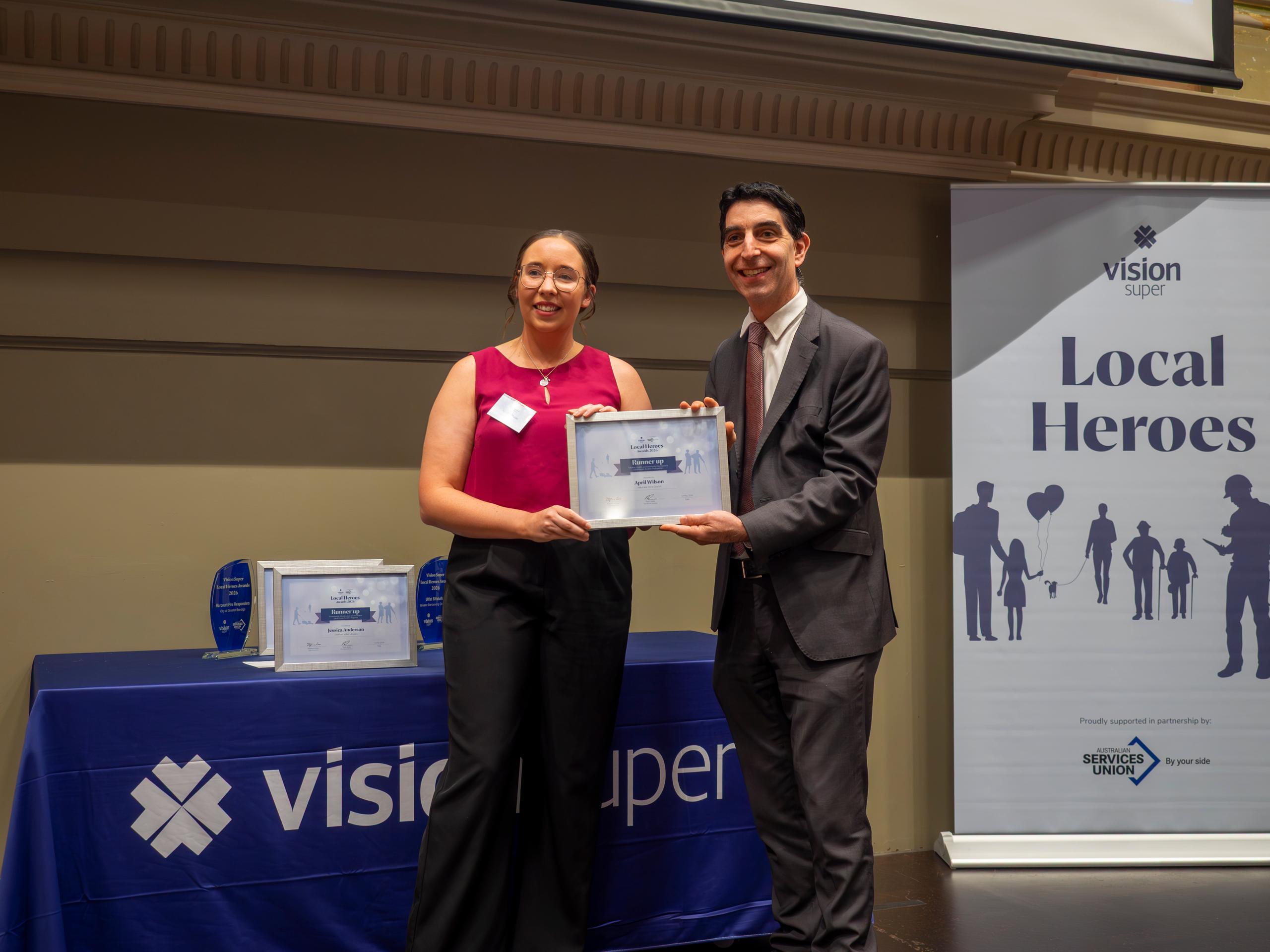
April Wilson, Nillumbik Shire Council
April drives the implementation of council’s Gender Equality Action Plan, ensuring that gender equity is embedded not only in policy, but also in organisational culture, decision-making and service delivery. April leads an internal program of Gender Equity Advocates, which has contributed to the completion of more than 120 equity impact assessments across the organisation over the past four years. She also strengthens collaboration across the family violence sector, co-convening the local Family Violence Network, and supports grassroots sporting clubs across multiple councils to improve gender equity and inclusion.
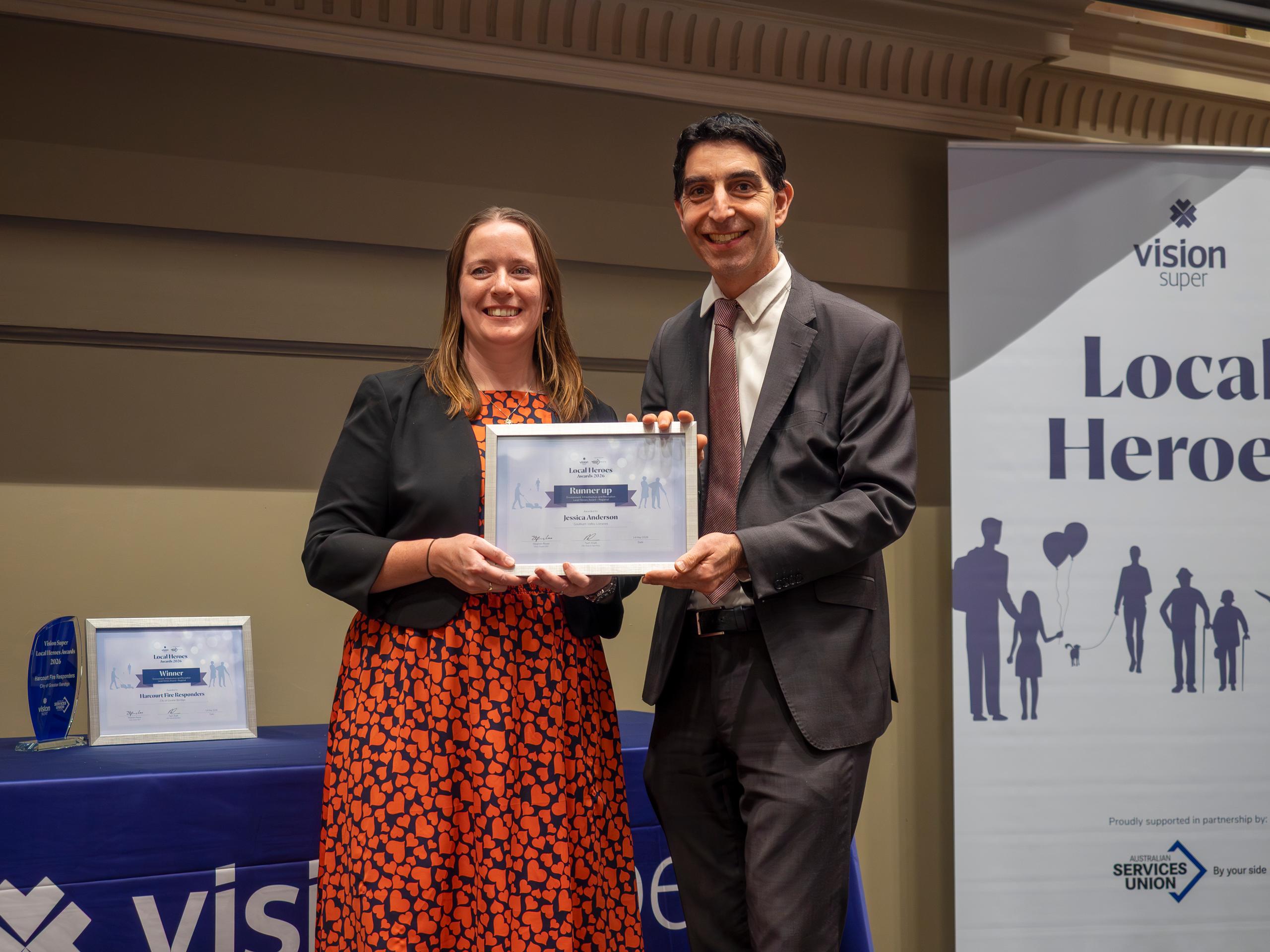
Jessica Anderson, Goulburn Valley Libraries
After participating in the Shared Leadership Program through Public Libraries Victoria and the State Library, Jess teamed up with Rachel D’Arcy from Brimbank Libraries to drive sustainability initiatives across Victorian libraries. Their report, Public Libraries and Sustainability in Victoria, provides practical guidelines across areas including waste reduction, First Nations engagement, and reducing carbon footprints. Their work has influenced libraries across Victoria, been presented at major conferences in Australia and internationally, and has helped promote long-term sustainable and inclusive practices within the library sector.
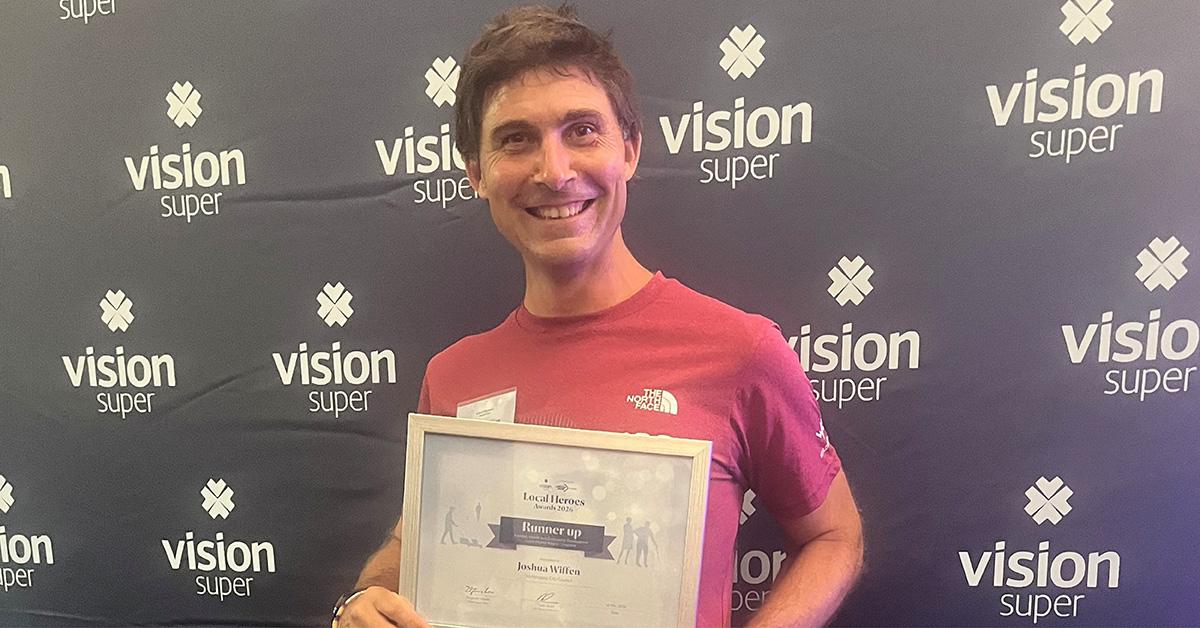
Joshua Wiffen, City of Wollongong
Joshua has made a significant contribution to youth and community development across the Illawarra and Wollongong region. Through his work in local government and community programs, he has led initiatives supporting community safety, homelessness services, First Nations engagement, and inclusion for women, LGBTIQ+, neurodiverse, and disadvantaged communities. He has delivered outreach programs focused on food security, recreation, employment pathways, and creative engagement for young people. Joshua has also developed arts, music, and wellbeing initiatives that strengthen community connection and participation.
Categories and criteria
To be nominated, the local government or library worker(s) must demonstrate at least one of the following criteria:
Made a significant difference to a community or member of a community
Contributed to the safety of an individual or group in the community
Made a substantial contribution to the welfare of a vulnerable person or group in the community.
An effective nomination clearly explains why the nominee is deserving of the award, what sets their contribution apart from others, and describes the impact or outcome of their contribution.
The winners and runners-up will be selected by a panel of judges comprised of members of the leadership teams at Vision Super and the ASU. Entries will be judged against a set criteria based on the specific award category.
You must also choose which of the following four awards categories your nomination is eligible for, based on whether the nominee works for a metropolitan or regional council, and the nature of their contribution and/or role at council.
There are four awards categories:
Environment, Infrastructure and Recreation Local Heroes Award – Metropolitan | Environment, Infrastructure and Recreation Local Heroes Award – Regional |
|---|---|
Families, Health and Community Development Local Heroes Award – Metropolitan | Families, Health and Community Development Local Heroes Award – Regional |
Unsure which category to choose? Please pick the category you think is most applicable – we may transfer the nomination if we think it is better suited to a different category. You will be informed if your nomination is transferred to another category.
Category descriptions
Local council jobs can generally be classified as either indoor (typically office based, professional or community service roles) or outdoor (usually working on site, roles may require physical labour) and the categories broadly reflect this.
The aim of the awards categories is to provide everyone with an opportunity to be recognised for their specific contributions, which may not always be comparable across different locations and work environments.
Please note that the examples provided below are just there as a guide and are by no means exhaustive – the Local Heroes Awards are open to everyone in council!
Contributions or initiatives that are eligible for the environment, infrastructure and recreation category could relate to: | Contributions or initiatives that are eligible for the families, health and community development category could relate to: |
|---|---|
Parks and gardens | Child, maternal and community care |
Environmental sustainability | Community partnerships |
Asset and infrastructure projects (any size and cost) | Diversity and inclusion |
Disaster readiness and recovery | Libraries and community centres |
Sportsgrounds and leisure centres | Arts and culture |

$1,000 grand prize for the winners!
A $1,000 gift card grand prize will be presented to the winner of each award category and $500 gift cards to the runners-up to acknowledge the outstanding contribution made by these individuals or groups.
How to submit your nomination
You can nominate an individual or group by filling out a nomination form online. You’ll need contact details for you and the nominee/s (if you are submitting on behalf of someone else) to complete your nomination, so make sure you have these ready.
You can submit your nomination in writing or as a video, but when describing the reasons for your nomination, you must explain and include clear examples of what makes your nominee a local hero.
The awards are free to enter. To be a valid entry, the nominee must be a New South Wales or Victorian resident over the age of 18 and the act/contribution described in the nomination must have taken place between 1 January 2025 and 30 March 2026.
You can find the full Terms and Conditions for the Vision Super Local Heroes Awards here. Through participating in the event and/or nominating an individual, you agree to these terms and conditions.