The two main factors affecting the investment environment continue to be Artificial Intelligence (AI) and the Iran war. A favourable US March quarter profits season so far has helped propel the S&P 500 (the main US equity market) to record levels despite a lack of resolution in the Iran war. The ceasefire has held over recent weeks, despite some skirmishes in the Gulf region. Investors are pricing a resolution over coming weeks. This seems reasonable, although negative scenarios are still possible.
AI continues to be a key driver of US profits, with consensus expecting the Information Technology sector to generate profits growth of around 50% in both the March and June 2026 quarters. Consensus is also expecting profits growth for the S&P 500 (major US equity market) to be around 20% in each quarter of 2026. This is exceptionally strong growth and has been revised higher over recent months.
As at early May, nearly 90% of the largest 500 American listed companies (the S&P 500) had reported their earnings for the first three months of the year. Since 31 March, an independent data provider (FactSet) had increased its estimates for the growth in profits for the quarter by nearly 15%.
This is one of the largest upward revisions in many years - 10 sectors are reporting higher profits growth today versus 31 March. While there were some one-off factors that boosted profits, the outcomes so far have been generally favourable and provided support to equity markets.
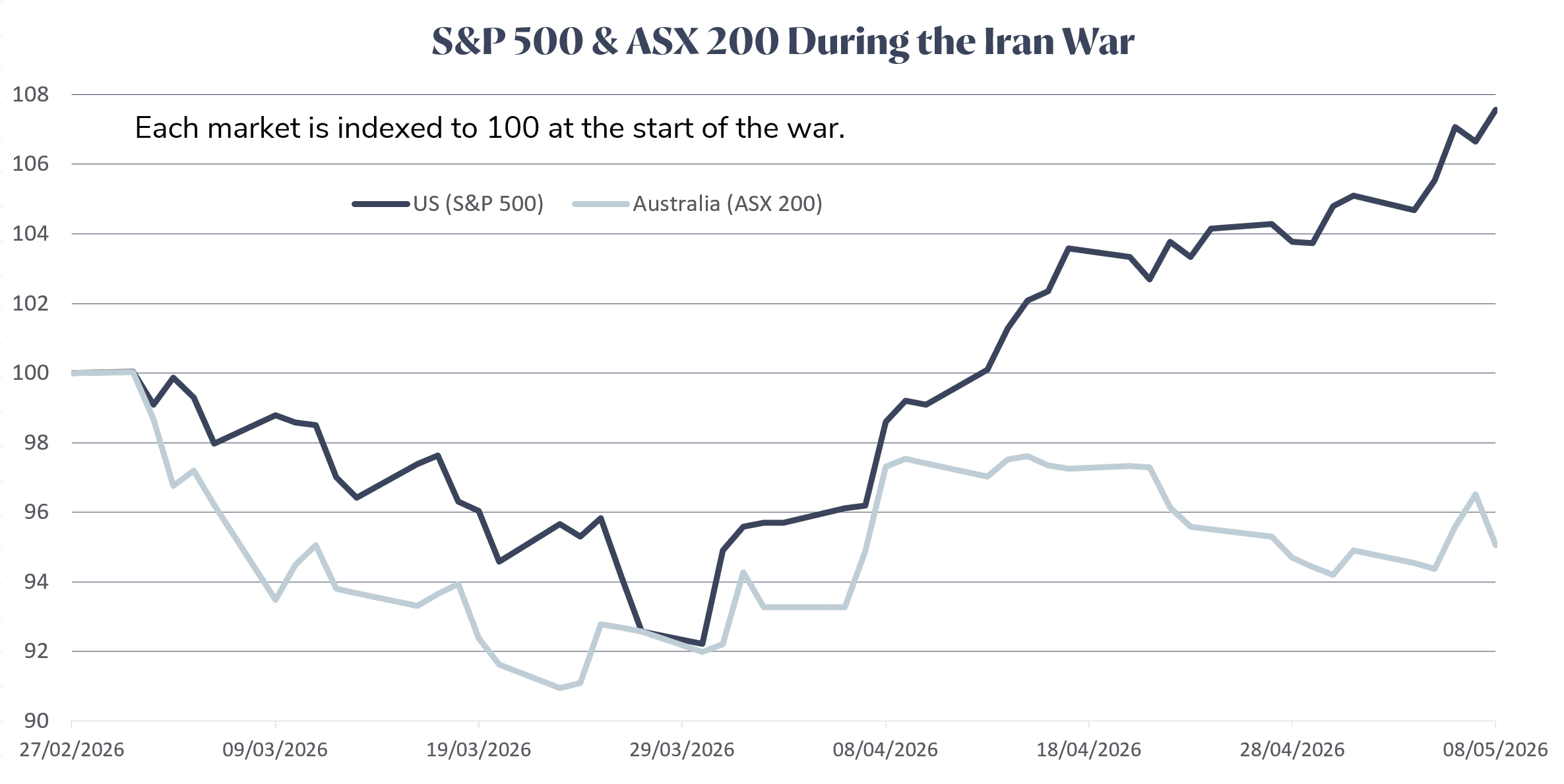
While the S&P 500 has rebounded sharply over recent weeks reflecting the Iran war moving toward a potential resolution and favourable US profit outcomes, the ASX 200 has performed relatively poorly. This underperformance reflects factors such as little direct exposure to the AI infrastructure boom, Australia’s much higher dependency on refined energy products that are directly impacted by the effective closure of the Strait of Hormuz and the Reserve Bank of Australia (RBA) raising interest rates.
Chart 1: Equity Market Performance Since the Start of the Iran War
 Source: LSEG
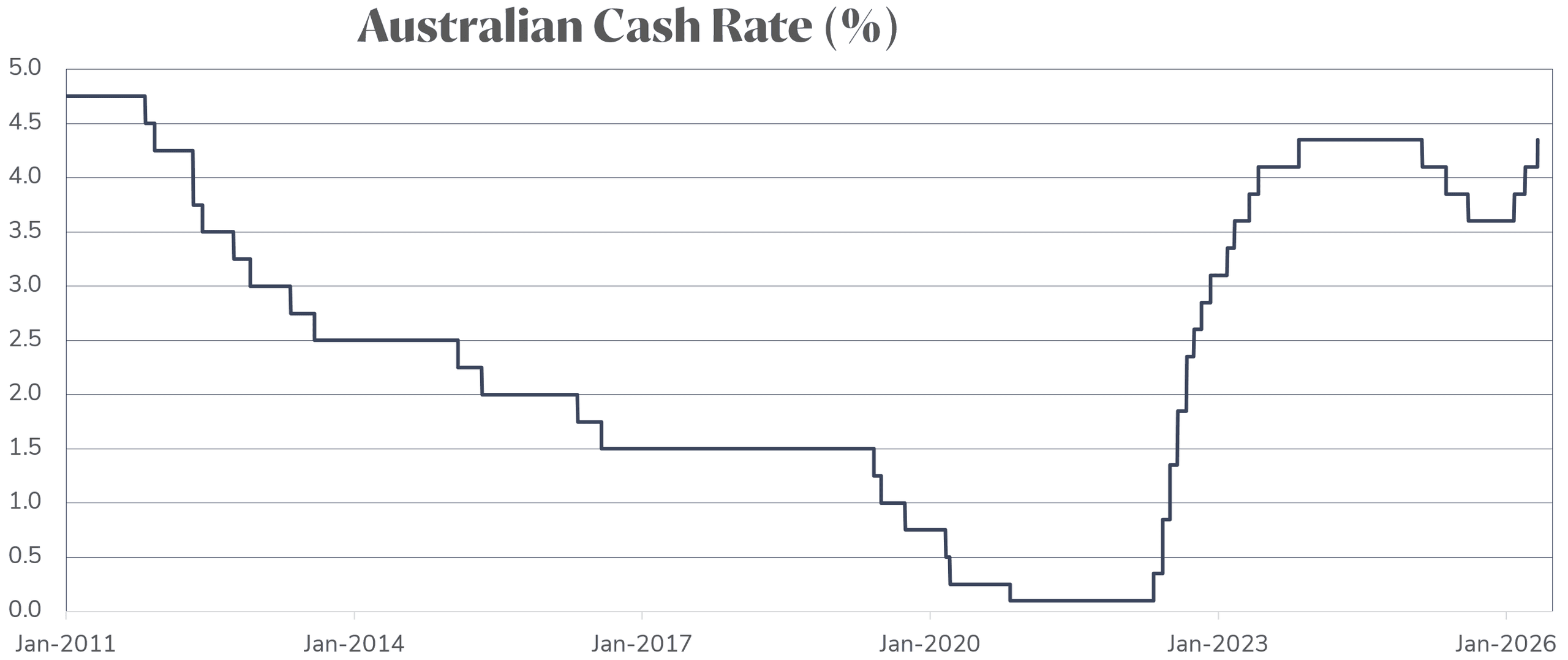
Reflecting higher than targeted inflation and the expectation that the Iran war will create additional inflation pressure, the RBA increased its cash rate to 4.35% in May. The market is pricing another interest rate rise later this year. Developments related to the Iran war remain important for the Australian economy. To the extent that oil supply through the Strait of Hormuz remains impaired, the economy will suffer. Conversely, should a resolution that allows oil supply to get back to close to the pre-war levels soon, the economy would likely improve with a bit of a lag.
Chart 2: Australian Cash Rate
Source: Reserve Bank of Australia
Investment returns are not guaranteed. Past performance is not a reliable indicator of future returns.
Issued by Vision Super Pty Ltd ABN 50 082 924 561 AFSL 225054. This information is general advice which does not take into account your personal financial objectives, situation or needs. Before making a decision about Vision Super, you should think about your financial requirements and consider the relevant Product Disclosure Statement and Target Market Determination.