US interest rates have an important influence on global investment markets. At the start of the year, the US bond market expected the US Federal Reserve (the Fed) to cut interest rates by around 0.5% during 2026. Instead, the Fed raised rates by 0.25% in September — its first increase in around three years. Investment markets now expect further US rate rises over the coming months.
Why has the Fed started raising interest rates again? There are two main reasons: inflation pressures have been higher than expected, and the US economy has remained resilient. Recent inflation pressures have mainly come from higher energy prices due to the conflict in the Middle East, and very strong investment in US data centres to support artificial intelligence (AI) - see chart below.
Chart 1: US Data Centre Construction as a % of Private Sector Construction
 Source: U.S. Census Bureau
The chart below shows that the inflation measure targeted by the Fed has remained above its 2% target for more than five years. It peaked at around 5.5% early in the pandemic and has since fallen to around 3%. The Fed is concerned that with inflation higher than targeted for so long businesses will expect inflation to remain high and as a result continue to raise prices, which could lead to even higher inflation.
Chart 2: US Inflation*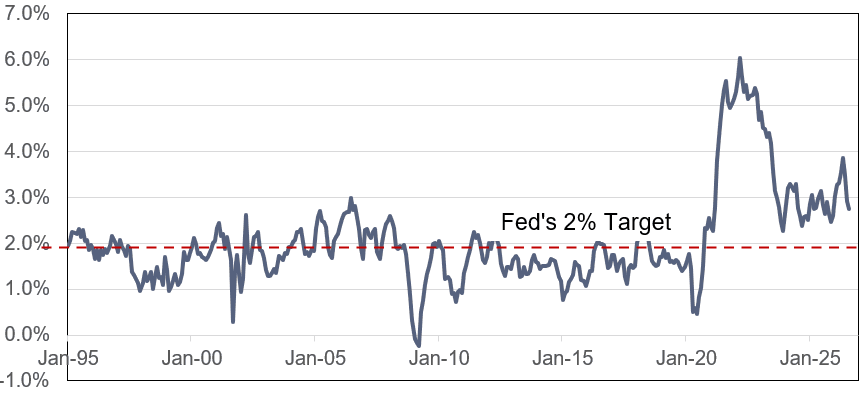 *The chart shows inflation measured by the personal consumption expenditure deflator, excluding food and energy, over rolling 12-month periods.
Source: US Bureau of Labor Statistics
The second reason for the Fed raising rather than cutting rates in 2026 is stronger economic growth. US GDP grew by more than 2% in the first half of 2026, with growth of around 3% expected in the third quarter. The economy has therefore needed less support than expected at the start of the year. Further rate rises are also likely to be needed to prevent it from growing too quickly, which could add to inflation pressures.
US company profits have grown strongly in 2026, but the S&P 500 (the main US share market index) has moved broadly sideways in recent months. Rising interest rates and concerns about how AI infrastructure will be financed have constrained its performance. We expect these factors to remain important for investment markets through the rest of 2026 and into 2027. On the upside, current market prices may not fully reflect the productivity benefits of AI. These benefits could support further gains in global share markets. On the downside, tighter US financial conditions could put downward pressure on share prices.
Investment returns are not guaranteed. Past performance is not a reliable indicator of future returns. The information is correct at the time of publication but may have since changed.
Issued by Vision Super Pty Ltd ABN 50 082 924 561 AFSL 225054. This information is general advice which does not take into account your personal financial objectives, situation or needs. Before making a decision about Vision Super, you should think about your financial requirements and consider the relevant Product Disclosure Statement and Target Market Determination.